Flat roofs in Bellevue are on offices, shops, apartments and a good number of mid-century houses with low-slope torch-down sections. Months of steady rain test them harder than anything else. These are the questions owners ask most.
What is the best material for a flat roof?
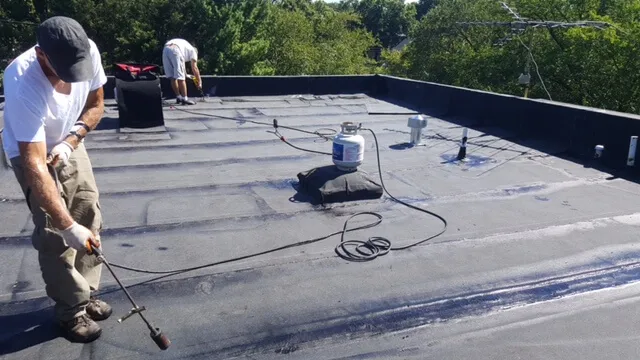
The best flat roof material depends on the building, but for most roofs here it is a single-ply membrane (TPO or PVC) or modified bitumen. Heat-welded TPO and PVC seams hold up well under standing rain. Modified bitumen, often called torch-down, is tough and common on houses. EPDM rubber is a proven choice on simple roofs with few penetrations.
TPO, EPDM or PVC: what is the difference?
TPO and PVC are plastic membranes with seams welded by hot air. EPDM is a rubber sheet with glued or taped seams.
| Membrane | Published lifespan | Installed, per sq ft | Good to know |
|---|---|---|---|
| TPO | 10 to 25 years | $4.00 to $10.00 | Welded seams. Usually white. |
| PVC | 20 to 30 years | $5.00 to $12.00 | Welded seams. Resists grease and chemicals, so it suits restaurants. |
| EPDM | 15 to 25 years | $3.50 to $10.00 | Flexible rubber. Seams are the weak point over time. |
| Modified bitumen | 10 to 20 years | $4.00 to $7.50 | Torch-down or self-adhered. Common on homes. |
| Built-up | 20 to 30 years | $3.50 to $7.50 | Layers of asphalt and felt, often with gravel. |
Costs and lifespans are national HomeGuide figures for 2026, not our quotes.
Why does water pond on my flat roof?
Water ponds because it has nowhere to go. The usual causes are a blocked drain or scupper, a deck that has sagged or settled, or insulation that was laid without enough slope. In Bellevue the first suspect is always needles and leaves in the drains. Water that is still standing two days after the rain stops is a problem. It adds weight, finds every weak seam and grows moss and algae.
Clearing drains fixes many cases. Others need added drains or tapered insulation to build slope into the roof.
Can a flat roof be coated instead of replaced?
A flat roof can be coated instead of replaced when the membrane is still sound and the insulation under it is dry. A coating seals small cracks and adds years. It will not fix wet insulation, failed seams or ponding areas, and some coatings do not tolerate standing water. Roof coating costs $1 to $4 per square foot nationally. Published coating life is 10 to 15 years for silicone and 7 to 20 for acrylic. We check moisture in the roof first.
How long does a flat roof last?
A flat roof lasts 10 to 30 years depending on the material, by the published figures in the table above. Drainage and upkeep decide where in that range a roof lands. A roof whose drains are cleared every fall will outlast the same roof left to pond all winter.
There are bubbles or blisters on my flat roof. Is that bad?
Blisters mean air or moisture is trapped between layers of the roof. Small, firm blisters away from seams can often be left alone and watched. Do not step on them or pop them. Large blisters, blisters at seams or ones that have split open let water in and need repair. HomeGuide lists blistering and cracking repair at $250 to $1,250 nationally.
Does a commercial roof need regular maintenance?
Yes. A commercial roof needs maintenance at least twice a year: in fall before the rains and in spring after them, plus a check after any major wind storm. Each visit should clear drains, scuppers and gutters, check seams and flashings, look at the seals around rooftop units and record everything with photos. Many membrane warranties require proof of regular inspection, so keep the reports.
My house has a torch-down section. Can it be replaced on its own?
Yes. The low-slope section of a house can be replaced without touching the pitched roof, as long as the tie-in between the two is rebuilt properly. That joint, and the edge where the membrane meets a wall, are where these roofs leak first. If the shingled part is also near the end of its life, doing both together gives a cleaner joint.
Does heavy snow matter on a flat roof here?
Only now and then. Lowland snow in Bellevue is occasional and usually melts within days. The risk comes in the rare heavy, wet snowfall followed by rain, when blocked drains let water and slush build up. Keeping drains open is the main defense. Removing snow from a roof is rarely needed here, and when it is, it should be done carefully so shovels do not cut the membrane. HomeGuide lists roof snow removal at $200 to $500 per visit nationally.
Is foam roofing a good choice for a flat roof?
Spray foam roofing can work on a flat roof, but it is not a common choice in the Puget Sound area. It is used far more in dry, sunny states. Foam has to be sprayed onto a completely dry surface in calm, dry weather, and it needs a protective coating that must be renewed. Our long damp season makes that harder to get right. HomeGuide lists spray foam at $3.50 to $7.00 per square foot installed nationally. Welded membranes and modified bitumen are the usual picks here.
Can you replace the roof on my shop while we stay open?
In most cases a business can stay open during a re-roof. The work is done in sections, and each section is made watertight before the crew leaves for the day. Expect noise, some dust and a blocked-off area for the dumpster and material. Tell us your opening hours, delivery times and where customers walk in, so the loud or smelly work can be planned around them. Call (425) 522-5354 to talk through your building.
A free roof inspection with photos and a written quote is the only way to get a real price for your roof. Call or text The Bellevue Roofers at (425) 522-5354.