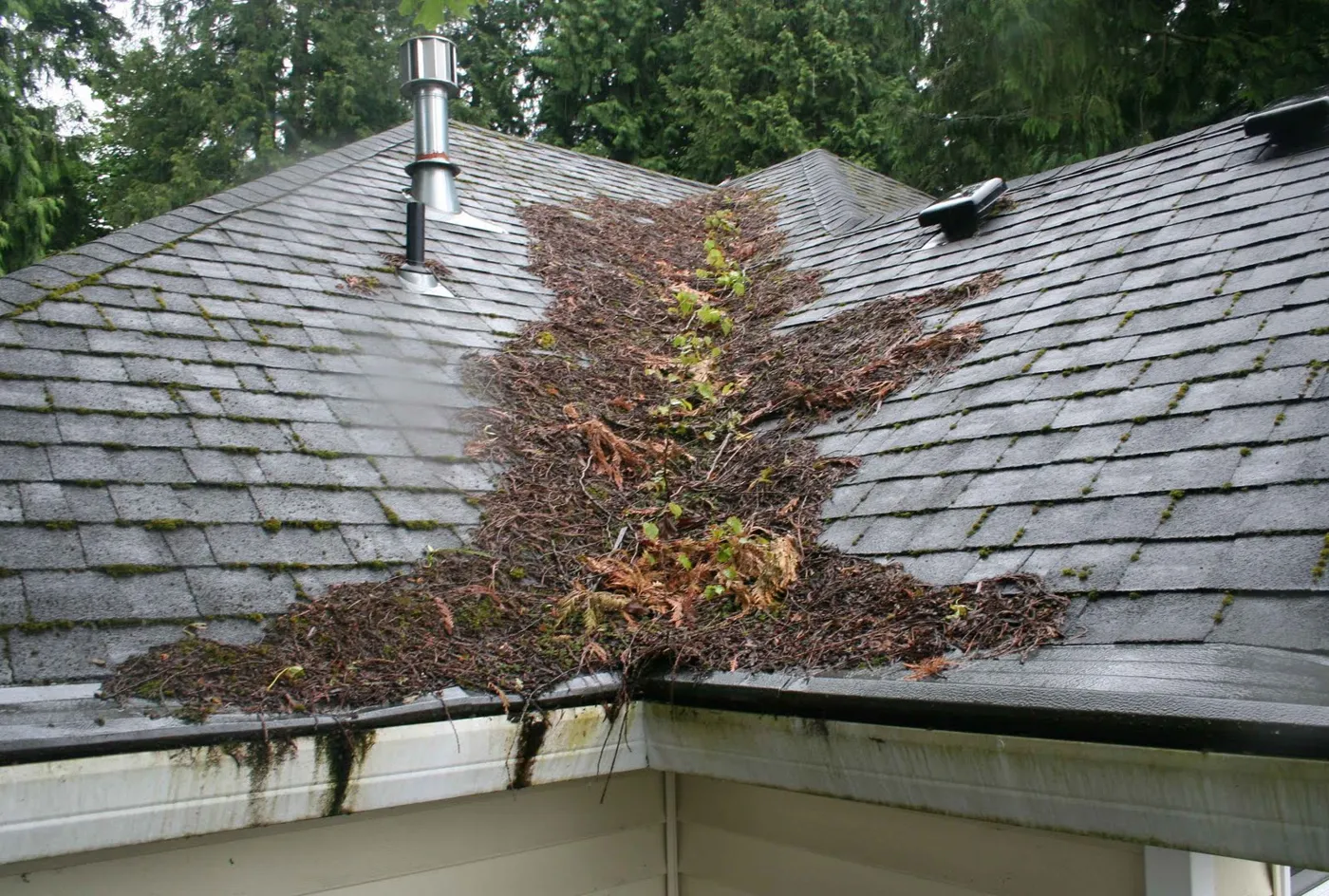
An architectural shingle roof lasts 20 to 30 years by national published figures, and most house replacements take one to three days. The Northwest's wet season shapes both the life of the roof and the best time to replace it.
How long does a roof last?
It depends on the material. These are the lifespans HomeGuide publishes.
| Material | Published lifespan |
|---|---|
| 3-tab asphalt shingles | 15 to 20 years |
| Architectural shingles | 20 to 30 years |
| Luxury asphalt shingles | 25 to 40 years |
| Wood shakes | 25 to 30 years |
| Metal | 30 to 80+ years |
| Concrete tile | 30 to 50+ years |
| Slate | 50 to 200+ years |
| Modified bitumen | 10 to 20 years |
| TPO | 10 to 25 years |
| EPDM | 15 to 25 years |
A roof in deep shade under firs, carrying moss and wet needles for half the year, tends toward the low end. A roof in the open that is kept clean tends toward the high end.
How long does a roof replacement take?
A roof replacement takes one to three days for most homes, depending on size and weather. Larger homes, steep or complex roofs, cedar shake tear-offs that need new sheathing and flat commercial roofs take longer. Can a roof be finished in one day? A small, simple gable roof with one layer to remove and sound decking sometimes is, on a long dry summer day. We do not promise it, because the deck decides once it is uncovered.
What is the best time of year to replace a roof?
The best time of year here is the dry season, roughly July through September. Dry days are close to certain, the days are long and shingle seal strips bond quickly in the warmth. It is also when every roofer is busiest, so book early. Late spring and early fall work well too, with a little more schedule risk from rain.
Can a roof be replaced in winter or in extreme heat?
Yes, a roof can be replaced in the winter here. Bellevue winters are mild, and we work in the dry spells between weather systems. The job may be done in sections and can take longer. The same goes for re-roofing in the rainy season in general, from about October to April: it is done all the time here, one watertight section at a time. Shingle seal strips need some warmth to bond fully, so in cold weather they take longer to seal. Extreme heat is uncommon in this area. On the few very hot days, crews start early because hot shingles scuff easily.
What happens if it rains during the job?
If it rains during the job, we stop and cover the roof. We watch the forecast and open up only as much roof as can be made watertight the same day. Underlayment goes on as soon as the old roofing is off, and it sheds a shower by itself. Open areas are tarped before the crew leaves. Ask any roofer how they handle this before you sign, because in the Northwest it will come up.
Do I need to be home, and how loud is it?
You do not need to be home, though we like to walk the job with you at the start and the end. It is loud. Tear-off and nailing sound like steady hammering through the whole house. People who work from home, small children and pets are usually happier elsewhere for the day. Let your neighbors know the dates.
How do I get my house and yard ready?
A little preparation the day before goes a long way:
- Move cars out of the garage and driveway.
- Clear patio furniture, grills and planters away from the house.
- Take down fragile items from walls and shelves. Hammering shakes the house.
- Cover things stored in the attic, since dust and grit fall through.
- Mark sprinkler heads and point out delicate plants.
- Unlock gates and tell us about any outdoor outlets we can use.
- Keep children and pets inside or away.
How long do I wait for a start date?
The wait for a start date changes with the season. Summer and early fall book up first, and after a big wind storm repair calls come ahead of planned work. Call us for the current schedule. We give no fixed lead time here because it would be out of date within weeks. Materials in special colors, and HOA approval, can add time of their own.
How much snow can my roof hold?
A roof built to Bellevue's standard is designed for a roof snow load of 25 pounds per square foot. That is the city's figure for houses below 700 feet elevation. How much snow that equals in inches depends on how wet it is, since fresh powder is light and rain-soaked snow is heavy. So depth alone tells you little. Ordinary lowland snowfalls stay well inside the design. Warning signs are new cracks in ceilings, doors that suddenly stick and a visible sag.
Should I rake or shovel snow off my roof?
Almost never, in Bellevue. Snow here usually melts within days, and a roof rake or shovel scrapes granules off shingles and can cut a membrane. Climbing onto a snowy roof is dangerous. The useful job is at ground level and at the drains: keep downspouts and flat roof drains clear so melt water can get away.
Are heat cables worth it?
Heat cables are rarely worth it in Bellevue. They are made for places where ice dams form every winter, and the lowlands seldom get the long freezing spells that cause them. If one eave or valley ices up in every cold snap, the better fix is more attic insulation and better ventilation. HomeGuide lists roof heating cables at $5 to $15 per linear foot nationally.
A free roof inspection with photos and a written quote is the only way to get a real price for your roof. Call or text The Bellevue Roofers at (425) 522-5354.